
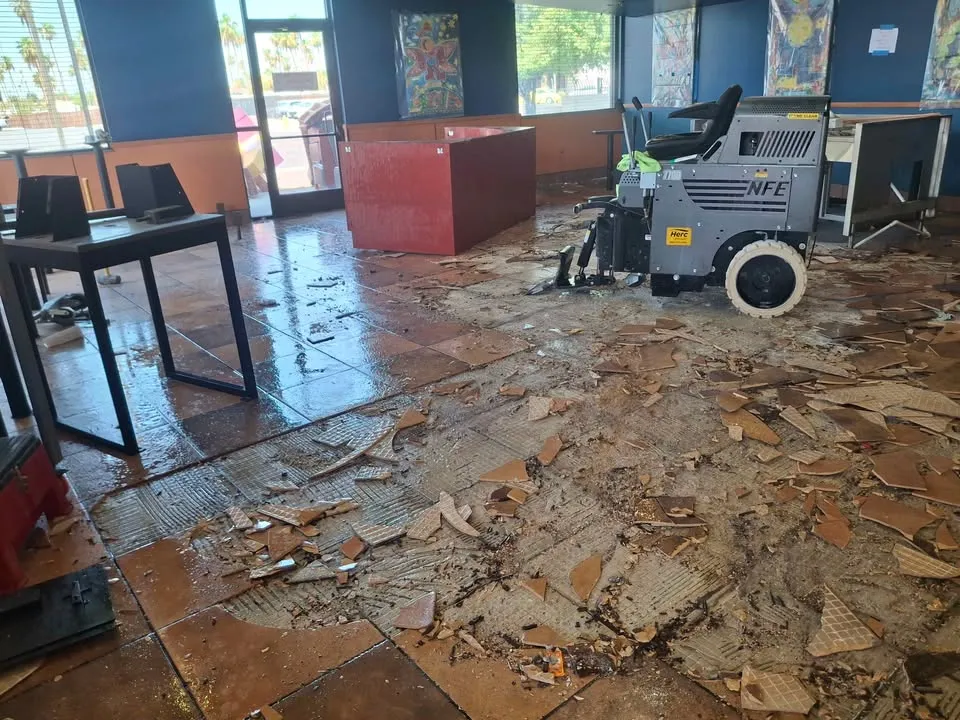
Older buildings carry their history in their materials. In Toronto, a 1960s office tower, a 1920s semi or a converted warehouse can hold asbestos in pipe insulation, lead in paint and silica in concrete and masonry. Left alone, most of these materials sit quietly. Demolition is what disturbs them, which is why every responsible set of demolition processes starts by finding out what’s there.
What Ontario law requires
Ontario’s Occupational Health and Safety Act sets out the owner’s duty. Before a project begins, the owner has to determine whether any designated substances are present at the site and prepare a list of them. That list has to reach a prospective contractor before a binding contract is signed, and if the work is tendered, it goes into the tender package. The Infrastructure Health and Safety Association summarises these owner duties well.
The law also attaches consequences. An owner who skips this step can be liable to contractors for losses caused when an unlisted substance turns up that the owner should reasonably have known about.
The eleven designated substances
Ontario regulates eleven designated substances: acrylonitrile, arsenic, asbestos, benzene, coke oven emissions, ethylene oxide, isocyanates, lead, mercury, silica and vinyl chloride. On building demolition, the usual concerns are asbestos, lead, mercury (found in old thermostats and fluorescent tubes) and silica. Surveys often flag other hazards too, such as PCBs in older light ballasts or mould behind finishes.
What a survey looks like
A qualified consultant inspects the areas affected by the work, samples suspect materials and sends them to a laboratory. The report lists what was found, where and in what condition, along with the survey’s limitations. Read those limitations closely. A report written for a washroom renovation five years ago won’t cover a full-floor strip-out, and areas the surveyor couldn’t reach are often left out. Before relying on an existing report, compare its surveyed areas with your actual removal plan.
How results shape the job
Findings change the order of work. Asbestos work in Ontario follows Regulation 278/05, which sets procedures according to the type of material and the work involved. Abatement normally happens before general demolition, inside a controlled work area, by trained workers. Lead paint can affect how surfaces are cut or removed. Silica dust from cutting concrete is controlled with water and dust extraction.
Results also change the schedule and the price. Knowing early lets you plan abatement into the timeline instead of discovering it after the walls are open and the crew is standing around.
When something unexpected appears
Even good surveys miss things hidden inside walls or under floors. If workers find a suspect material that isn’t in the report, work in that area stops until it’s sampled and assessed. On older properties, it makes sense to build that pause into your contingency from the start.
Keep a short protocol on site: who stops the work, who calls the consultant, how the area is sealed off and who approves the restart. Writing it down before demolition begins turns a potential argument into a routine step in your demolition processes.
Owner checklist
- Commission or locate a survey that covers the actual removal area
- Share the full report, limitations included, with every bidder
- Confirm who handles any abatement, and in what order
- Agree in writing how unexpected finds will be handled
Need a second look at your report?
When you send SiteClear your survey report with an estimate request, we’ll compare it against the proposed removal area and flag anything it doesn’t cover before work is priced. Request a free estimate or call 647-693-1416.